It is a scene that plays out in boardrooms and IT departments more often than we’d like to admit. The audit date is circled in red on the calendar. For three weeks, the entire IT staff is in a state of controlled panic. They are hunting for logs from six months ago, frantically updating spreadsheets, and trying to remember who approved a specific firewall change in October. It’s a “mad scramble” culture where the goal isn’t actually security—it’s simply surviving the audit.
Then comes the day of the review. Despite the overtime and the stress, a gap is found. Maybe it was a missing patch on a legacy server or a user account that should have been deactivated months ago. The result? A failed audit.
Now we aren’t just talking about a bad grade. We’re talking about massive fines, lost contracts with clients who require SOC2 or HIPAA compliance, and a sudden, sharp drop in stakeholder confidence. For many companies, the cost of a failed audit isn’t just financial; it’s a blow to the company’s reputation that can take years to repair.
The problem is that most organizations treat compliance as a “point-in-time” event. They check the boxes once a year and then let the operational discipline slide. But in a world of rapid digital transformation and constant threats, “once-a-year” is a recipe for disaster. The solution is a shift toward continuous compliance—integrating your security posture into the very fabric of your daily IT operations.
What Exactly Is Continuous Compliance?
When people hear the word “compliance,” they usually think of a checklist. They think of a rigid set of rules imposed by a regulatory body like PCI-DSS, HIPAA, or Sarbanes-Oxley (SOX). While those rules are the destination, continuous compliance is the vehicle that gets you there and keeps you there.
Continuous compliance is the practice of using automated tools, disciplined processes, and real-time monitoring to ensure that your security controls are functioning correctly every single day, not just during audit week. Instead of a snapshot of your security posture taken once a year, you have a live movie.
Think of it like a health check. A traditional audit is like going to the doctor once a year for a physical. You might find out you have high blood pressure, but you don’t know when it happened or why. Continuous compliance is like wearing a fitness tracker. You see your heart rate, your sleep patterns, and your activity levels in real-time. If something spikes or drops, you know immediately and can fix it before it becomes a medical emergency.
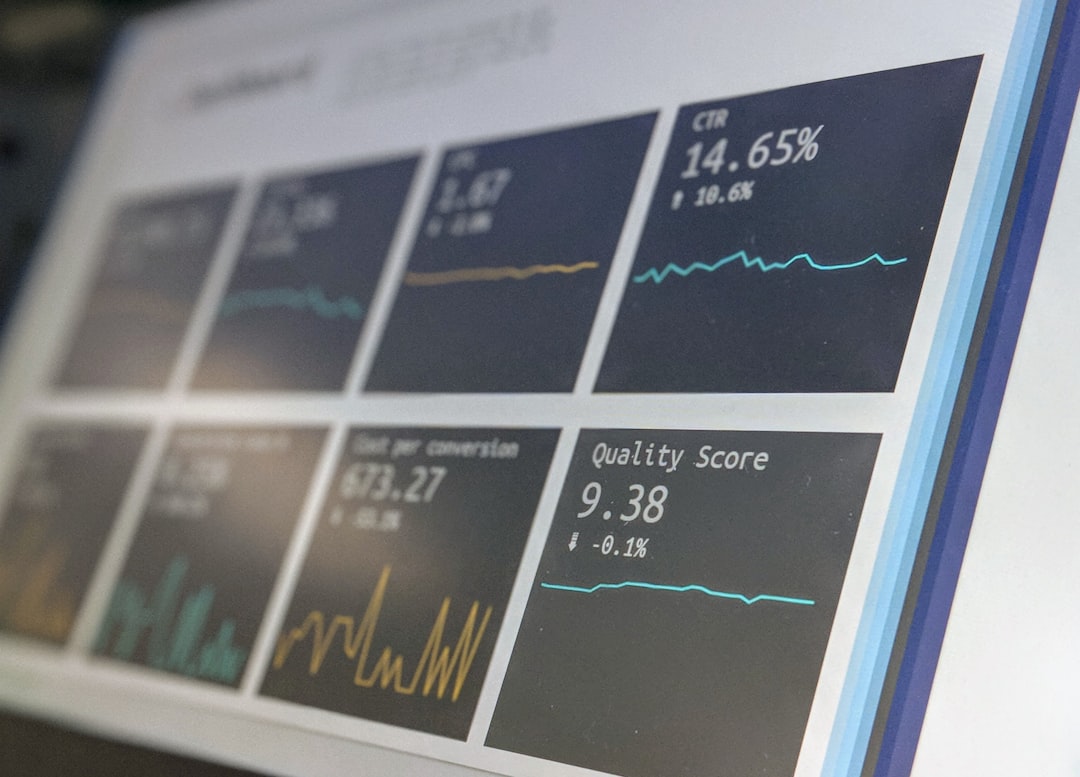
In the context of IT operations, this means shifting away from manual evidence collection. Instead of a human manually checking if every server is encrypted, you have a system that alerts you the second a non-encrypted volume is created. You move from “I hope we’re compliant” to “I know we’re compliant because the dashboard says so.”
The Shift from Manual to Automated
For decades, compliance was a manual chore. It involved “sampling”—where an auditor looks at 10% of your tickets to see if they were approved. The problem is that the other 90% could be a mess, and you wouldn’t know until you failed.
Continuous compliance replaces sampling with total visibility. By leveraging the VisibleOps framework, organizations can bridge the gap between the people who run the systems (IT Ops) and the people who secure the systems (Security). When these two groups work in silos, compliance fails. When they are integrated, compliance becomes a byproduct of good operational excellence.
The High Cost of “Point-in-Time” Compliance
If you’re still doing audits the old-fashioned way, you’re carrying a significant amount of hidden risk. Let’s look at why the traditional approach is so dangerous and costly.
The “Compliance Gap”
The “compliance gap” is the period between your last audit and your next one. If you are audited every twelve months, there is a massive window where your controls can drift. Configuration drift happens naturally: a technician opens a port to troubleshoot a problem and forgets to close it; a new employee is granted “admin” rights for a temporary project and still has them six months later; a software update resets a security setting to default.
During this gap, you are technically non-compliant, and more importantly, you are vulnerable. An attacker doesn’t care that your audit was three months ago; they care about the open port you forgot to close today.
Resource Drain and Burnout
The “audit scramble” is an incredible drain on productivity. When your best engineers spend two weeks gathering screenshots and logs for an auditor, they aren’t spending that time improving the product or fixing actual bugs. This leads to burnout. IT professionals hate the “compliance theater”—the act of pretending everything is perfect for the auditor while knowing the underlying systems are brittle.
Financial Penalties and Lost Business
Depending on the industry, the cost of failure can be staggering. In healthcare, HIPAA violations can lead to millions of dollars in fines. In retail, failing a PCI audit can lead to the loss of the ability to process credit cards. But the biggest cost is often the “lost opportunity.” Many enterprise clients now require a current SOC2 Type II report before they will even sign a contract. If you can’t produce that report because you failed your audit, you are literally handing your leads to your competitors.
How to Implement a Continuous Compliance Framework
Moving to a continuous model isn’t something that happens overnight. You can’t just buy a piece of software and call it “continuous compliance.” It requires a change in how you view the relationship between operations and security.
1. Map Your Requirements
You can’t monitor what you haven’t defined. The first step is to create a comprehensive matrix of every regulatory requirement you must meet. If you’re dealing with HIPAA, PCI, and SOX, you’ll find a lot of overlap. Don’t treat them as separate silos. Instead, find the “common denominator.”
For example, almost every framework requires strong identity management and access controls. Instead of having three different processes for three different audits, create one gold-standard process for identity management that satisfies all of them.
2. Integrate Operations and Security (The VisibleOps Approach)
This is where most companies fail. They have a “Security Team” and an “Ops Team.” The Security team tells Ops what to do, and Ops does it (or doesn’t).
To achieve continuous compliance, you must integrate these functions. This means your change management process must include a security review. Every time a system is changed, the compliance check should be part of the workflow. If a change violates a compliance rule, the system should ideally prevent that change from being deployed in the first place.
3. Implement Real-Time Monitoring
You need tools that provide a “single pane of glass” view of your environment. You should be able to see, in real-time, whether your backups are running, whether your patches are current, and who has administrative access.
But monitoring isn’t just about having a dashboard. It’s about alerting. A dashboard that tells you a server is unpatched is useless if nobody looks at the dashboard for a week. You need an automated alert system that triggers a ticket in your ITSM (IT Service Management) tool the moment a compliance drift is detected.
4. Automate Evidence Collection
The goal is to reach a state where the auditor doesn’t ask you for a report; you simply give them access to a read-only dashboard.
Instead of manually exporting logs, use tools that automatically archive evidence. If someone asks, “Did you review your admin accounts last quarter?” you shouldn’t have to find an email. You should be able to show a timestamped log of the review process, signed off by the appropriate manager, stored in a secure repository.
Bridging the Gap Between Technical Controls and Executive Oversight
One of the biggest hurdles in preventing audit failures is the communication gap. CISOs and IT Managers speak in terms of “CVEs,” “micro-segmentation,” and “latency.” CEOs and Board members speak in terms of “risk,” “revenue,” and “liability.”
When an audit fails, the executive team is often blindsided. They were told “everything is under control,” and suddenly they are facing a legal nightmare. This happens because the technical teams are reporting activities instead of outcomes.
The Need for an Executive Lens
Executives don’t need to know how many firewall rules were updated this week. They need to know:
- Are we currently meeting our regulatory obligations?
- Where is our highest area of risk?
- Do we have the resources necessary to maintain our security posture?
This is why a framework like the VisibleOps Cybersecurity: Executive Companion Handbook is so vital. It strips away the jargon and translates technical compliance into business language. When executives understand the why behind the security spend, they are more likely to provide the budget and support needed to move from a “scramble” model to a “continuous” model.
Creating a Culture of Accountability
Compliance shouldn’t be the “security team’s problem.” It’s a business function. When the board of directors views cybersecurity as a pillar of operational excellence rather than a technical annoyance, the culture changes. Accountability moves from the person who forgot to close a port to the process that allowed the port to stay open.
Deep Dive: Zero Trust and Its Role in Continuous Compliance
You cannot have modern continuous compliance without a Zero Trust architecture. The old “castle and moat” strategy—where you trust everything inside your network and block everything outside—is dead. In a world of remote work and cloud services, there is no “inside” anymore.
Continuous Verification
The core tenet of Zero Trust is “never trust, always verify.” This aligns perfectly with continuous compliance. Instead of granting a user access to a system and assuming they are safe for the next eight hours, Zero Trust continuously verifies their identity, their device health, and their permissions.
If a user’s device suddenly misses a critical security patch, a Zero Trust system can automatically revoke their access to sensitive data until the patch is applied. This is continuous compliance in action: the system identifies a non-compliant state and remediates it instantly without human intervention.
Micro-segmentation
Audit failures often happen because a breach in one small area leads to a total system compromise. Micro-segmentation prevents this by breaking the network into small, isolated zones.
From a compliance perspective, this is a game-changer. If you are subject to PCI-DSS, you only want the “Cardholder Data Environment” (CDE) to be under the strictest audit scrutiny. By using micro-segmentation, you can isolate the CDE from the rest of your corporate network. This reduces the “audit scope,” meaning there are fewer systems for the auditor to check, which drastically reduces the chance of a random failure in a non-critical system triggering a wider audit issue.
Common Mistakes That Lead to Audit Failures
Even companies that believe they are doing “continuous compliance” often fall into these traps. If any of these sound familiar, your next audit might be a struggle.
1. Relying on “Shadow IT”
Shadow IT happens when departments buy their own software-as-a-service (SaaS) tools without telling the IT department. You can’t ensure compliance for a system you don’t know exists. If your marketing team is storing customer PII (Personally Identifiable Information) in an unapproved cloud tool, you are out of compliance, regardless of how secure your main servers are.
2. The “Set It and Forget It” Mentality
Many organizations set up an automated monitoring tool and then stop paying attention to the alerts. These are called “alert fatigue” zones. When a system generates 500 “medium priority” alerts a day, the team starts ignoring them. Eventually, a “critical” alert gets buried in the noise, a vulnerability goes unpatched, and the auditor finds it.
3. Lack of Proper Change Management
A common audit failure is the “unauthorized change.” An engineer makes a “quick fix” to a production server at 2:00 AM to stop an outage. They fix the problem, but they don’t document the change. Three months later, the auditor asks for the change ticket for that specific modification. There isn’t one.
In a VisibleOps environment, no change happens without a ticket. Period. The process is integrated so that the act of making the change is the act of documenting the change.
4. Confusing “Security” with “Compliance”
This is a dangerous mistake. Being “compliant” means you meet a specific set of rules. Being “secure” means you are actually protected from attack. You can be compliant and still get hacked. However, you can almost never be truly secure without being compliant.
The goal should be to use compliance as the baseline and then build actual security on top of it. If you only aim for the “checkbox,” you’ll find gaps that a clever auditor—or a clever hacker—will exploit.
Step-by-Step: Transforming Your Audit Process
If you’re currently in the “scramble” phase, here is a practical roadmap to move toward continuous compliance.
Phase 1: The Audit Post-Mortem
Start by looking at your last failed audit (or the “near misses”).
- What specifically was the failure? (e.g., “Missing quarterly access reviews”)
- Why did it happen? (e.g., “The manager forgot to sign the PDF”)
- How could it have been detected automatically? (e.g., “An automated nag email and a dashboard showing pending reviews”)
Phase 2: Operational Alignment
Stop treating security as a separate department.
- Create a joint “Compliance Task Force” consisting of an Ops manager and a Security analyst.
- Review your Change Management process. Ensure every change requires a “security impact” check.
- Implement a centralized logging system. If logs are scattered across ten different servers, you will fail your audit. Move them to a single, immutable source.
Phase 3: Introducing Automation
Start small. Don’t try to automate everything at once.
- Week 1-4: Automate Patch Management. Ensure you have a report that shows every single machine is up to date.
- Week 5-8: Automate Identity Reviews. Move from manual spreadsheets to a system that flags “stale” accounts (users who haven’t logged in for 30 days).
- Week 9-12: Implement Configuration Monitoring. Use a tool that alerts you if a critical setting (like MFA) is disabled on an account.
Phase 4: The “Internal Audit” Cycle
Don’t wait for the external auditor. Run your own “mini-audits” every month. Pick one control—say, password complexity—and verify it across the entire board. This keeps the team in a state of readiness and ensures that the “compliance muscle” stays strong.
Comparison: Traditional Compliance vs. Continuous Compliance
To make it clearer, let’s look at the differences side-by-side.
| Feature | Traditional (Point-in-Time) | Continuous (VisibleOps Model) |
| :— | :— | :— |
| Evidence Collection | Manual screenshots and spreadsheets | Automated logs and real-time dashboards |
| Risk Detection | Found during the annual audit | Found in real-time via alerting |
| Staff Stress | Extreme “scramble” before audits | Low, consistent operational rhythm |
| Visibility | Snapshot/Sampled | Full and Constant |
| Executive View | “I think we’re okay” | “Here is the current risk score” |
| Response Time | Months (until next audit) | Minutes/Hours |
| Cost | High spikes of labor and potential fines | Consistent investment in automation |
A Practical Scenario: The “Ghost Account” Failure
Let’s look at a real-world example of how an audit fails and how continuous compliance would prevent it.
The Scenario: An IT Administrator, Sarah, leaves the company on good terms. Her manager tells HR to revoke her access. HR sends a ticket to the IT team. However, Sarah had a secondary “service account” she created years ago for a specific backup script. The IT team forgets about this account.
The Traditional Audit Failure: A year later, the auditor performs a user access review. They find the service account is still active, has domain admin privileges, and hasn’t been used in 11 months. The auditor marks this as a “significant deficiency.” The company fails the control for “Timely De-provisioning of Access.”
The Continuous Compliance Fix: Under a continuous framework, the organization has an automated “stale account” monitor. Every 30 days, the system scans for any account that hasn’t authenticated. It finds Sarah’s service account and flags it on a dashboard. An automated ticket is generated: “Account ‘Svc_Sarah’ has been inactive for 30 days. Does this still need to exist?” The IT manager sees the ticket, realizes Sarah is gone, and deletes the account. When the auditor arrives a year later, there is no ghost account to find. The problem was solved in real-time.
Compliance as a Service (CaaS) and the Future of Auditing
As the regulatory environment becomes more complex, many organizations are moving toward “Compliance as a Service.” This isn’t just a cloud product; it’s a philosophy. It means that compliance is treated as a living service that evolves with the business.
The integration of AI into this process is the next frontier. We are seeing the rise of “Intelligent Governance,” where AI doesn’t just alert you to a failure but suggests the fix. For example, an AI system might notice that a new cloud bucket is public and automatically change it to private, then log the action as a “self-healing” compliance event.
This is the direction the VisibleOps methodology is heading. By combining operational excellence with AI governance, companies can move from “preventing failure” to “guaranteeing integrity.”
How Scott Alldridge Helps You Solve This
Most companies know they need continuous compliance, but they don’t know how to build the bridge between their current mess and a streamlined system. They have the tools, but they don’t have the methodology.
This is where Scott Alldridge and the IT Process Institute (ITPI) come in. With over 30 years of experience and certifications like CCISO and CISSP, Scott has seen every possible way an audit can fail. He has developed the VisibleOps framework specifically to solve the “silo” problem between IT operations and cybersecurity.
Whether it’s through the comprehensive VisibleOps Cybersecurity Handbook or personalized consulting through IP Services, Scott provides the blueprints for transforming your IT department. He doesn’t just give you a checklist; he gives you a way to integrate disciplined change management, real-time monitoring, and Zero Trust architectures into your daily routine.
For non-technical leaders, Scott’s Executive Companion Handbook provides the exact language needed to oversee these initiatives without needing to become a networking expert. He helps you move from a position of “blind trust” in your IT team to “verified visibility” in your security posture.
Frequently Asked Questions (FAQ)
Q: Is continuous compliance only for huge enterprises?
Absolutely not. In fact, small to medium-sized businesses (SMBs) benefit the most. SMBs often don’t have a dedicated 20-person security team. For them, automation isn’t just a luxury—it’s the only way to stay compliant without hiring ten new people.
Q: How much does it cost to implement this?
The cost of implementing continuous compliance is almost always lower than the cost of a single failed audit. While there is an initial investment in tools and process redesign, you save thousands of man-hours every year by eliminating the “audit scramble.”
Q: Do I need to replace all my current tools?
No. You don’t need to rip and replace. Continuous compliance is about how you use your tools. It’s about integrating your existing logs, your existing ticketing system, and your existing monitoring into a cohesive workflow.
Q: Which is more important: the tools or the process?
The process always wins. You can buy the most expensive security software in the world, but if your “process” is to ignore the alerts, the tool is useless. Visibility is the first step, but operational discipline (the core of VisibleOps) is what actually prevents the failure.
Q: How long does it take to see a difference?
If you implement the “Internal Audit Cycle” mentioned above, you’ll see a difference in months. The “panic” level of your team will drop significantly the moment they realize they already have the evidence the auditor is going to ask for.
Final Takeaways and Action Plan
Preventing costly audit failures doesn’t require a miracle; it requires a shift in mindset. Stop treating the audit as the “final exam” and start treating compliance as a daily habit.
Your Immediate Action Plan:
- Inventory your gaps: Look at your last audit report. Identify the top three recurring failures.
- Break the silos: Bring your IT Ops and Security teams into the same room. Map out how a change in one affects the compliance of the other.
- Stop the “sampling” habit: Move toward 100% visibility. If you can’t prove a control is working across all systems, you don’t actually have a control.
- Educate the C-Suite: Ensure your executives have the tools (like the VisibleOps guides) to understand the risk and support the transition to a continuous model.
- Automate the evidence: Start with one simple control and automate its reporting. Prove the concept, then scale.
Compliance doesn’t have to be a nightmare of spreadsheets and stress. When you integrate security into your operations, you don’t just pass the audit—you build a resilient, secure business that can actually scale.
If you’re tired of the annual audit scramble and want to implement a proven framework for operational excellence and cybersecurity, explore the resources at scottalldridge.com. Stop hoping you’re compliant and start knowing you are.